Sommaire
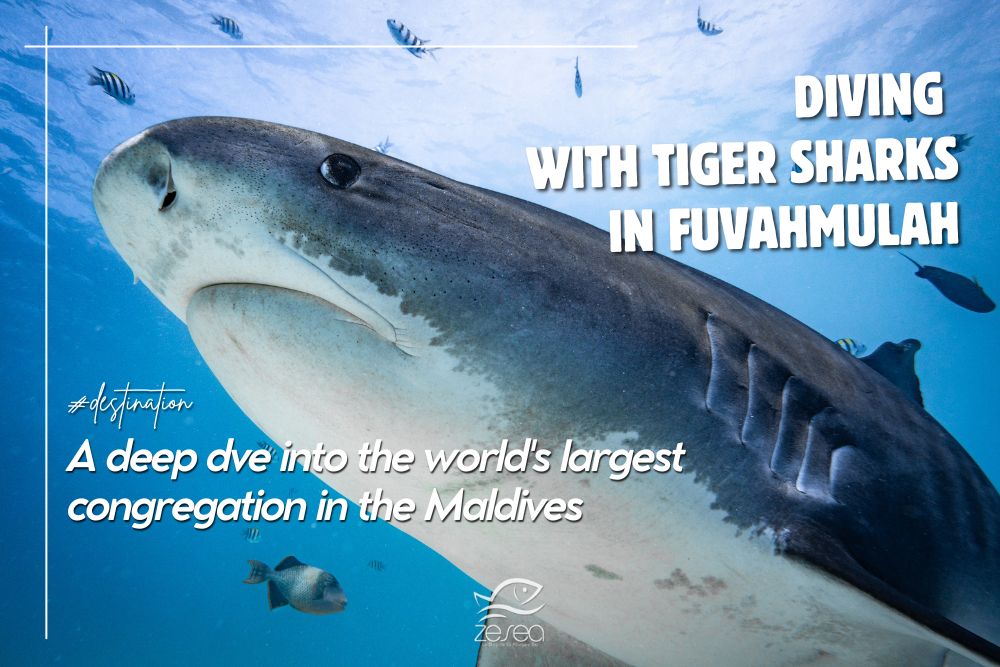
Fuvahmulah is a remote atoll in the southern Maldives that is home to the world’s largest known population of tiger sharks. I dived at this site in collaboration with the Fuvahmulah Central Dive Center to observe and document this exceptional population and understand what science really tells us about it. A look back at an extraordinary diving experience…
The Tiger Shark (Galeocerdo cuvier): Identification and Biology
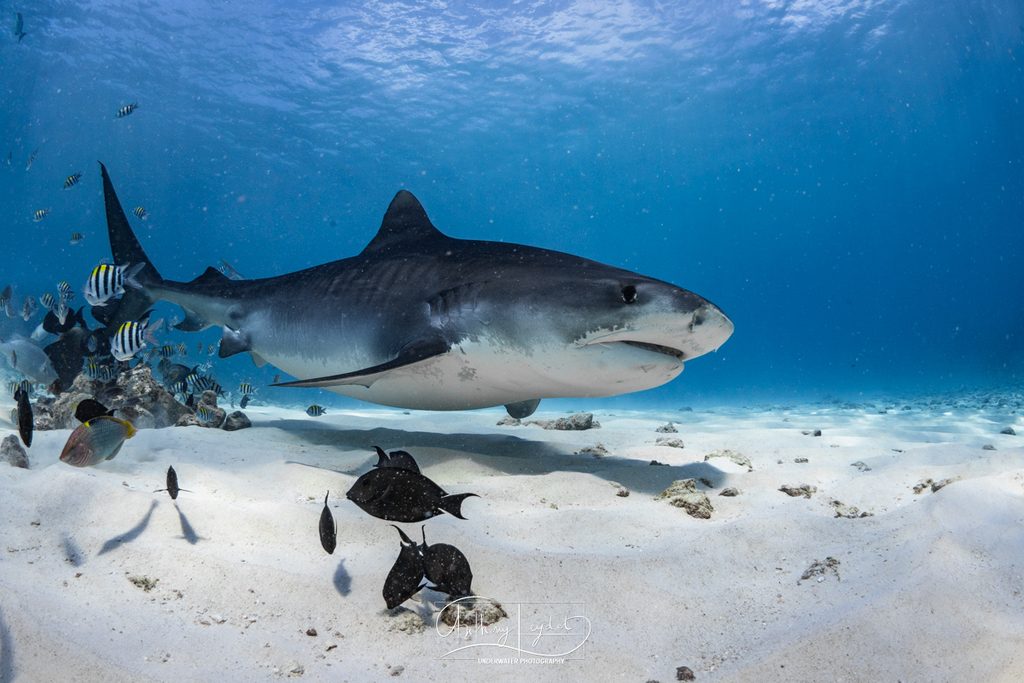
The tiger shark (Galeocerdo cuvier) is a large shark, recognizable by its dark vertical stripes, which are more pronounced in juveniles and fade with age. Locally known as Femunu miyaru, it can grow up to 5 meters long and weigh nearly 900 kg !
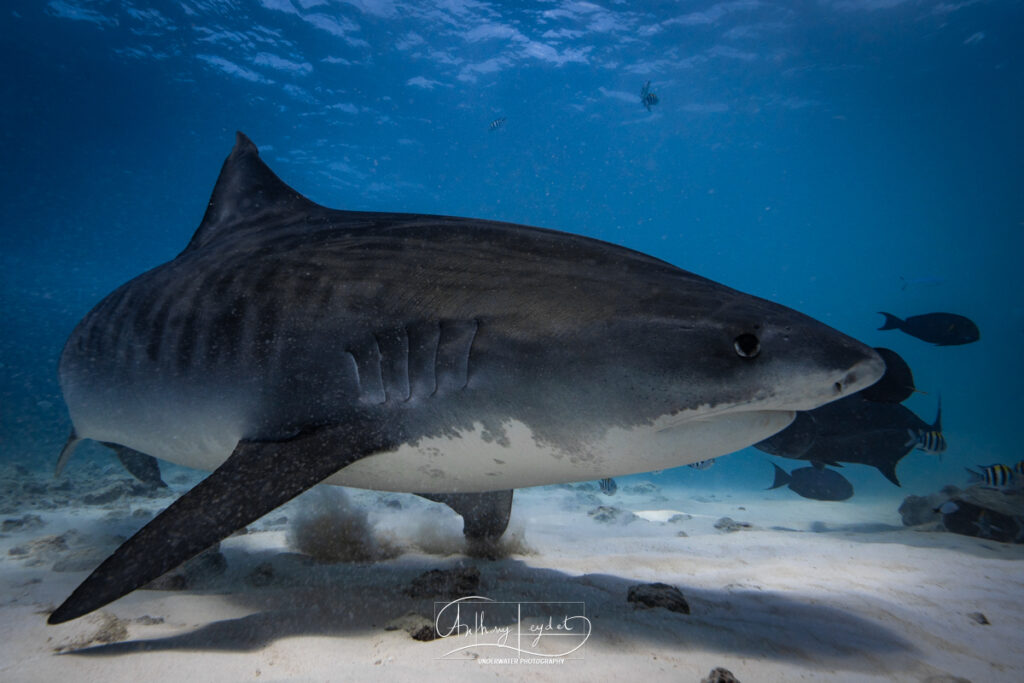
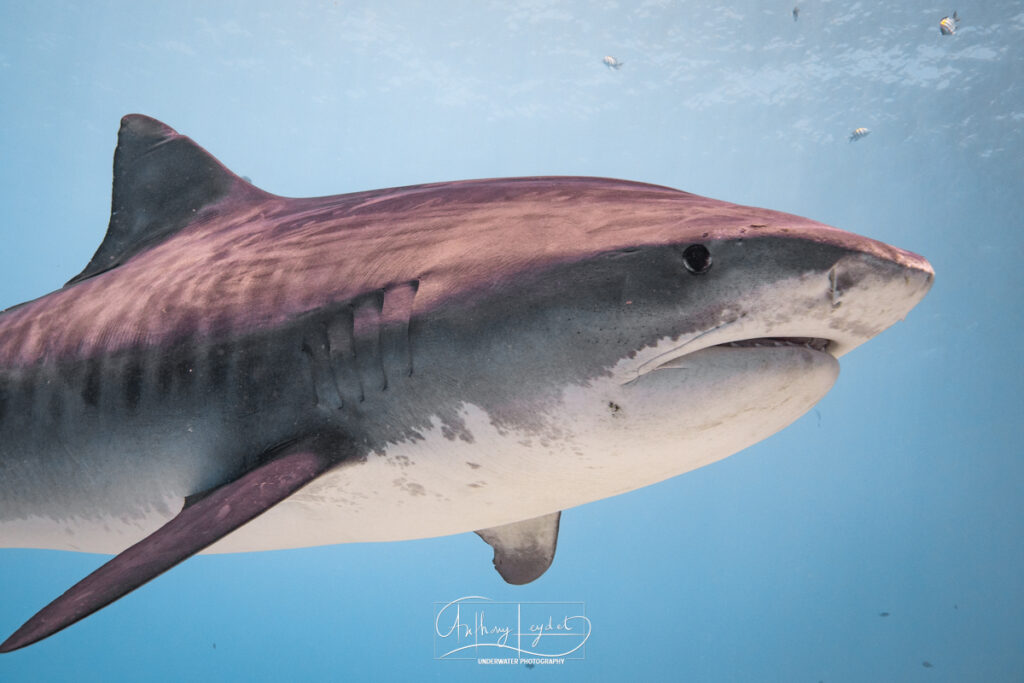
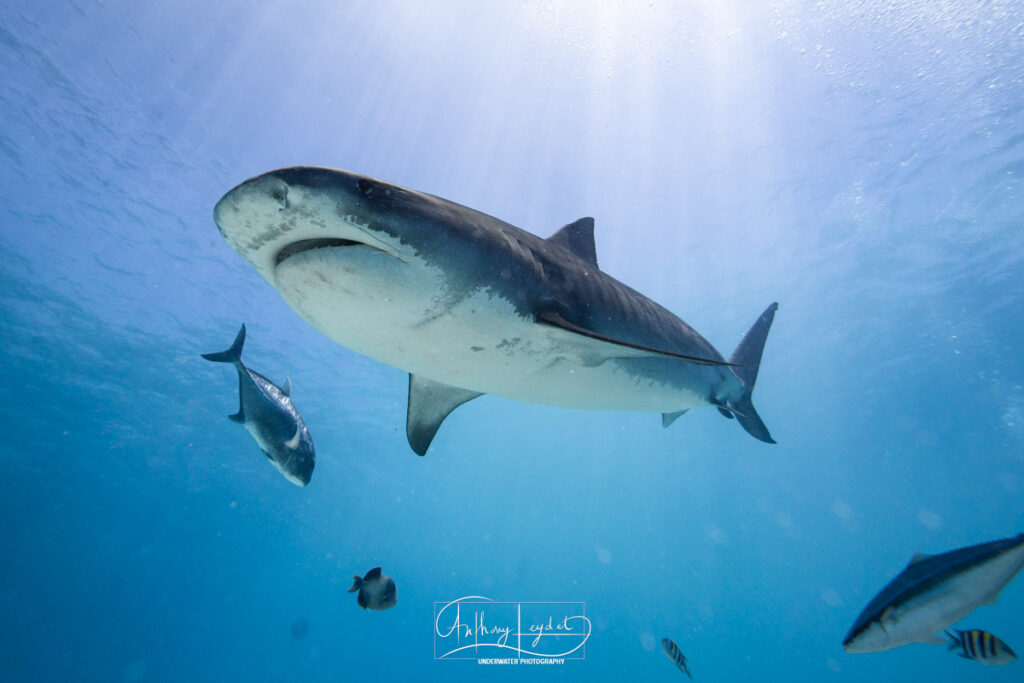
Its particularly opportunistic diet (fish, turtles, cephalopods, crustaceans, and sometimes carcasses) has earned it the nickname “the ocean’s garbage collector.” It is a circumglobal predator (i.e., currently found all around the Earth) in tropical and warm temperate waters, but population data remain scarce in the central Indian Ocean, making the research conducted in Fuvahmulah particularly valuable to the scientific community.
Conservation status: The species is classified as Near Threatened and is vulnerable to targeted overfishing and bycatch due to its slow reproductive rate.
Fuvahmulah, a refuge for tiger sharks
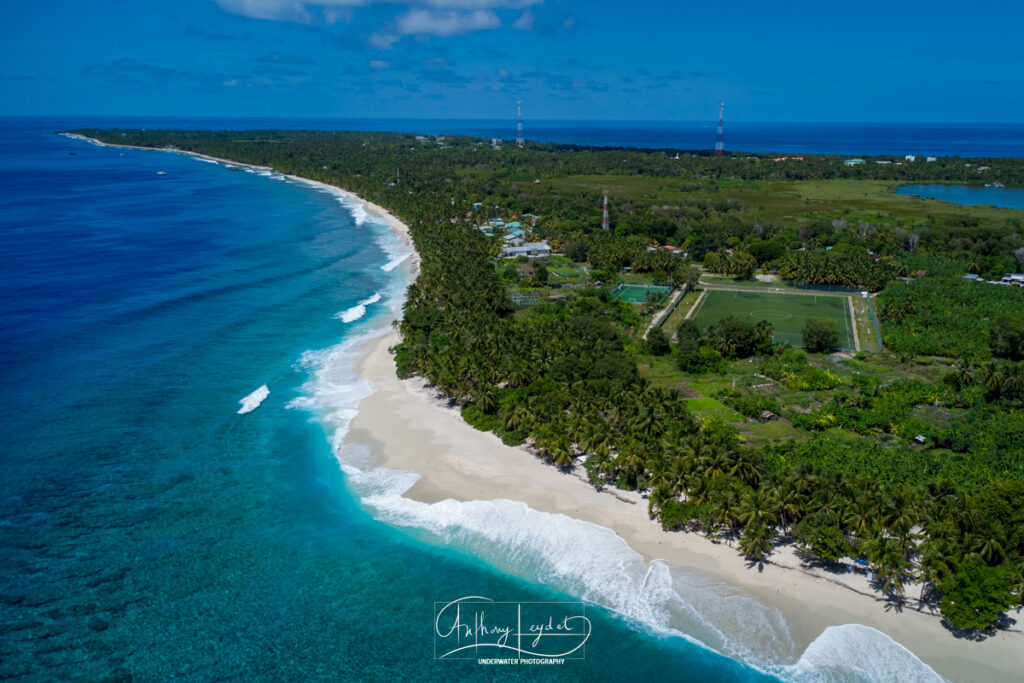
Fuvahmulah is a solitary island in the Gnaviyani Atoll (administratively the smallest in the Maldives, even though Fuvahmulah is not strictly speaking an atoll); designated a UNESCO biosphere reserve, it is immediately surrounded by waters deeper than 2,000 meters. Unlike most Maldivian islands, it does not belong to any closed atoll: this oceanic location makes it a natural crossroads of currents that attracts an exceptional abundance of pelagic life.
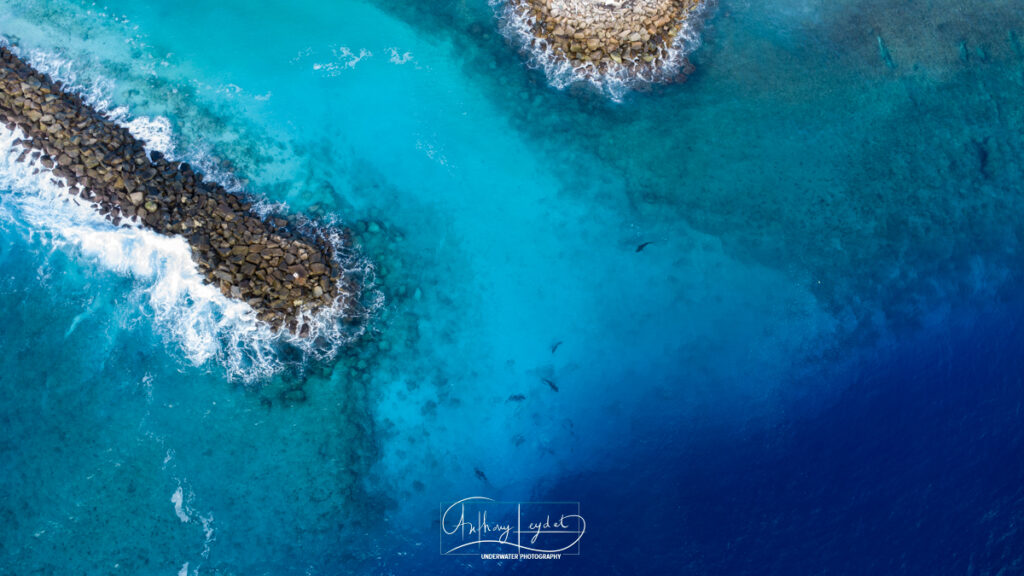
Why is there such a high concentration of sharks in Tiger Harbor?
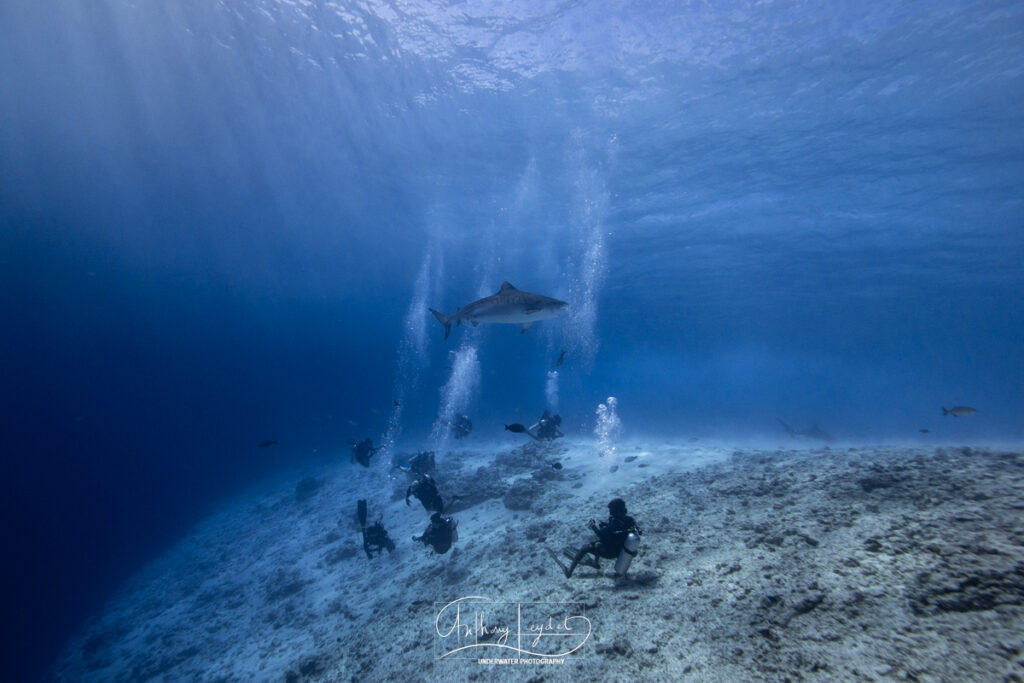
The main site, Tiger Harbor (formerly Tiger Zoo), is a horseshoe-shaped plateau located at a depth of 8–10 meters, a one-minute boat ride from the harbor, just outside its entrance. Since the port was built in 2004, waste from the local tuna fishing industry has attracted tiger sharks to this shallow area. Since 2017, the site has become a prime destination for tiger shark diving, now operated by several dive centers on the island, including the Fuvahmulah Central Dive Center.

What scientific studies say
A population of more than 300 individuals, mostly females
A study published in Scientific Reports (Nature, 2024) identified 239 distinct individuals over a seven-year period using noninvasive methods, photo-identification, and laser photogrammetry. The aggregation is dominated by females (84.5%), with large juveniles and adults present together. To date, this is the largest documented aggregation of the species in such a confined space.
In 2026, the Fuvahmulah Shark Research Laboratory announced that a total of 325 tiger sharks had been identified (as of September 2026) since 2017.
The discovery of a gestation zone
A second study, published in Frontiers in Marine Science (2024), used a portable submersible ultrasound scanner to scan females while they were swimming freely. The results showed that embryos were detected in 93% of the adult females examined (26 out of 28), with two distinct groups of embryo sizes, indicating different stages of gestation. This discovery makes Fuvahmulah the first identified gestation area for tiger sharks in the central Indian Ocean.
This research is part of the “Momma Shark Project,” led by researcher James Sulikowski (Oregon State University) in collaboration with the NGOs Fuvahmulah Dream, Miyaru Shark Program, and Nature Friends of the Maldives. Over the course of ten days in the field, the team scanned 35 sharks and detected 25 pregnancies at stages ranging from early to late gestation.
A more recent study, published in Marine Biology in May 2026, shows that site use follows a seasonal pattern linked to the monsoon: the calm, clear waters of the northeast monsoon encourage denser aggregations, whereas the harsher southwest monsoon, with less food available, causes part of the population, particularly males and pregnant females nearing term, to reduce their presence at the site.
When is the best time to dive with tiger sharks in Fuvahmulah?
Diving with tiger sharks is possible year-round in Fuvahmulah, but the best time is between January and April, during the dry season. This is also the best time to encounter whale sharks and oceanic manta rays. Encounters with thresher sharks are more frequent from October through December. Water temperatures range from 27 to 30°C between April and November and from 24 to 27°C between January and April.
Safe Diving: required level and procedure
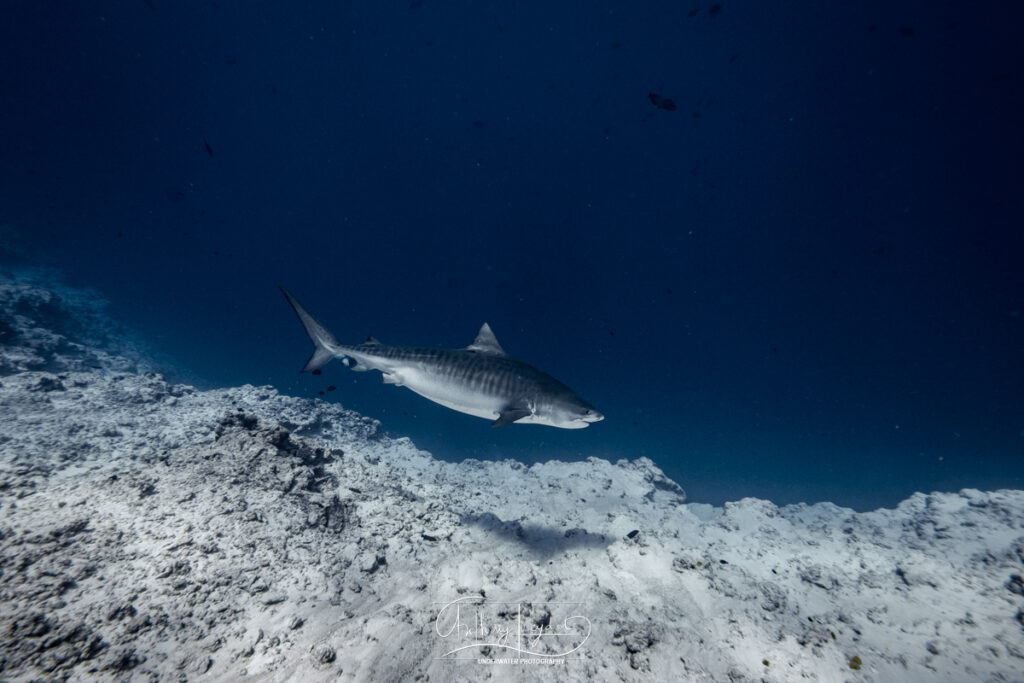
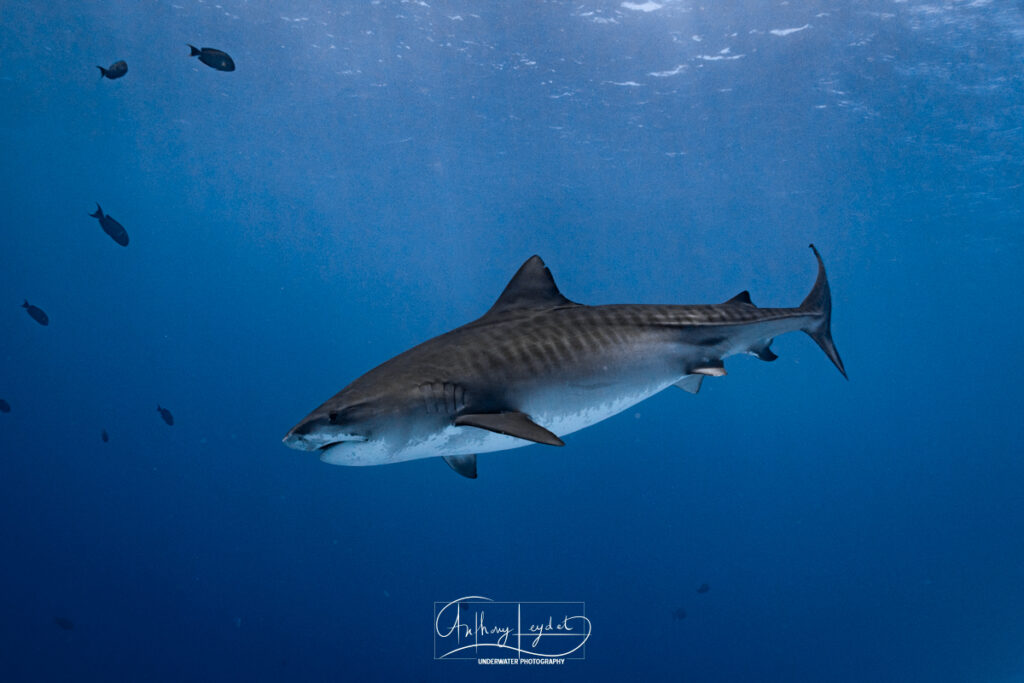
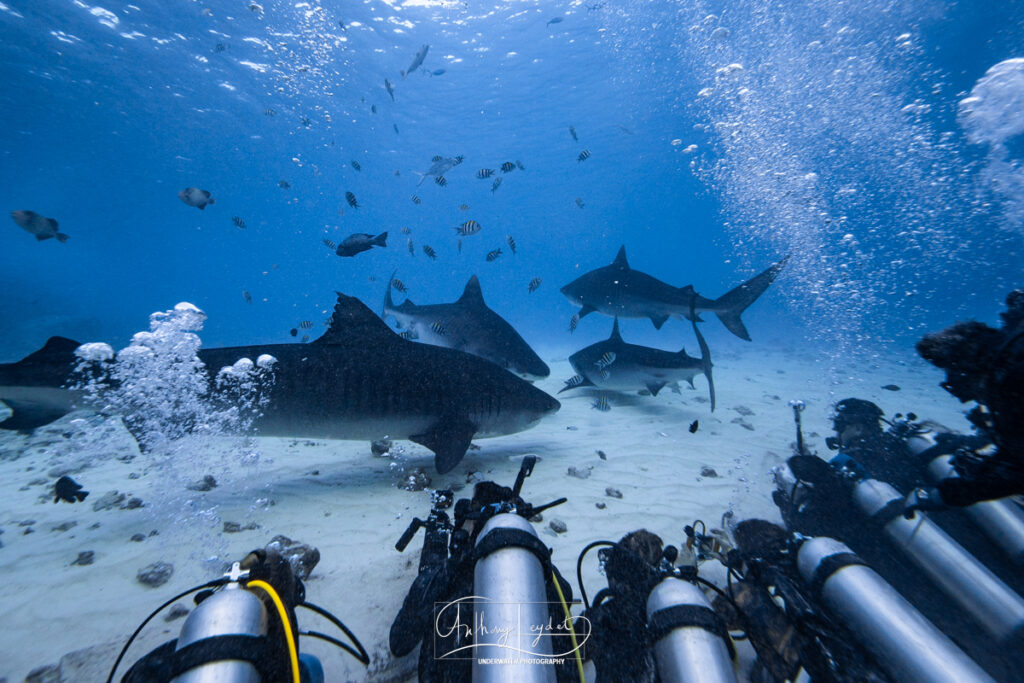
Diving at Tiger Harbor takes place in small, tight-knit groups, generally at a depth of around 5 meters, on a sandy bottom at 8–10 meters. It lasts a maximum of 45 minutes. Most reputable dive centers recommend an Advanced Open Water certification with about 100 logged dives, due to the currents and swells characteristic of this isolated oceanic island. The bait used to attract sharks is hidden under rocks by the guides rather than thrown directly into the water, in order to minimize any competitive feeding behavior near the divers.
The debate over Shark Feeding
Feeding sharks is, in theory, illegal in the Maldives: the Ministry of Tourism has repeatedly reminded dive centers and liveaboard operators that this practice is prohibited and considered dangerous. In practice, however, dive centers in Fuvahmulah continue to feed sharks daily to ensure visitors can see them, and to date there are no national laws or guidelines specifically regulating these baited dives; only voluntary codes of conduct, specific to each center, are in place.
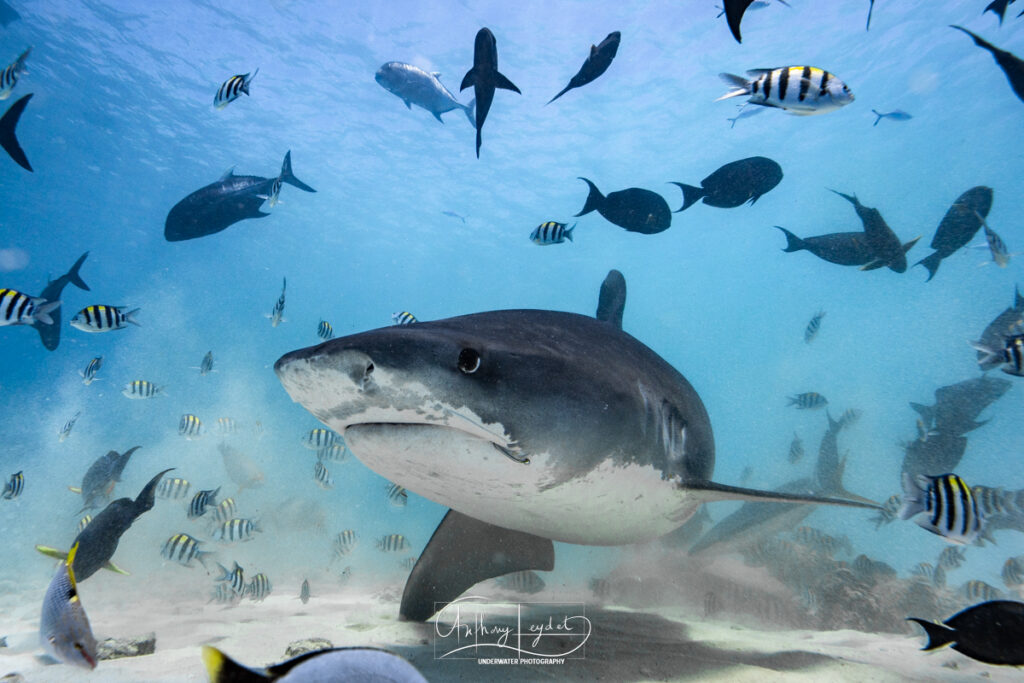
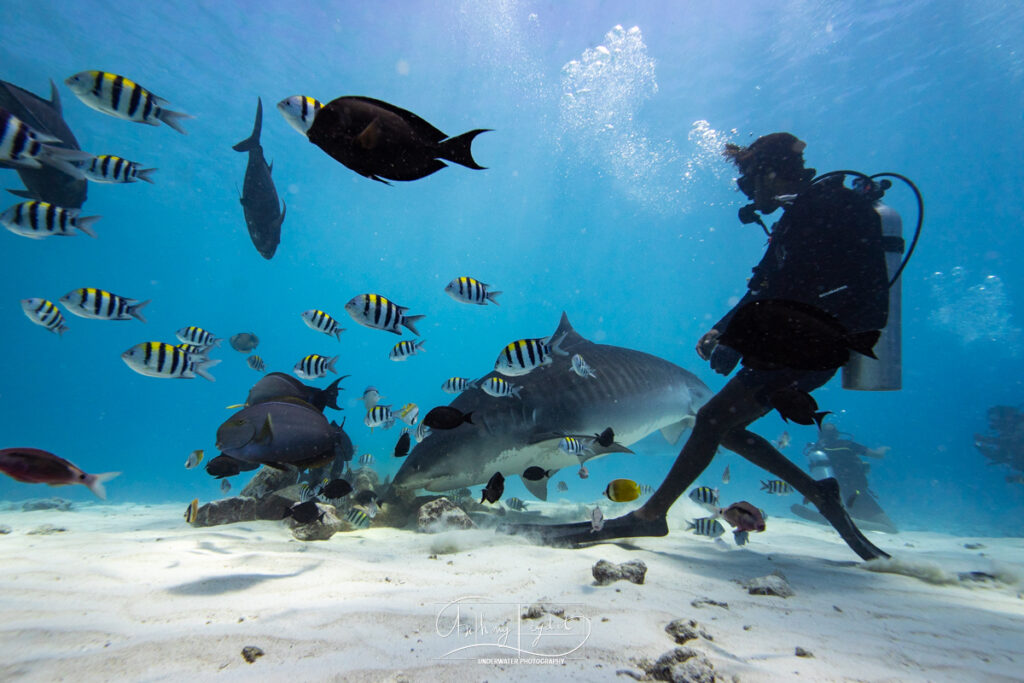
The scientific literature remains divided. Several studies show that ecotourism-based feeding does not increase site fidelity or permanently alter the behavior of tiger sharks, and that ecotourism generates economic benefits and increased support for conservation. Others point to an increased risk of incidents when food is introduced into the water, as competition for food leads to less predictable behavior. Researchers who have worked at the site recommend establishing a management framework that involves all stakeholders, similar to locally managed marine protected areas such as those in Fiji.
On-the-ground reality: Few, if any, incidents have been reported here. Diving tourism in Fuvahmulah generates significant economic value, which encourages the conservation of tiger sharks, even though managing these activities remains a challenge.
My diving experience with Fuvahmulah Central Dive Center
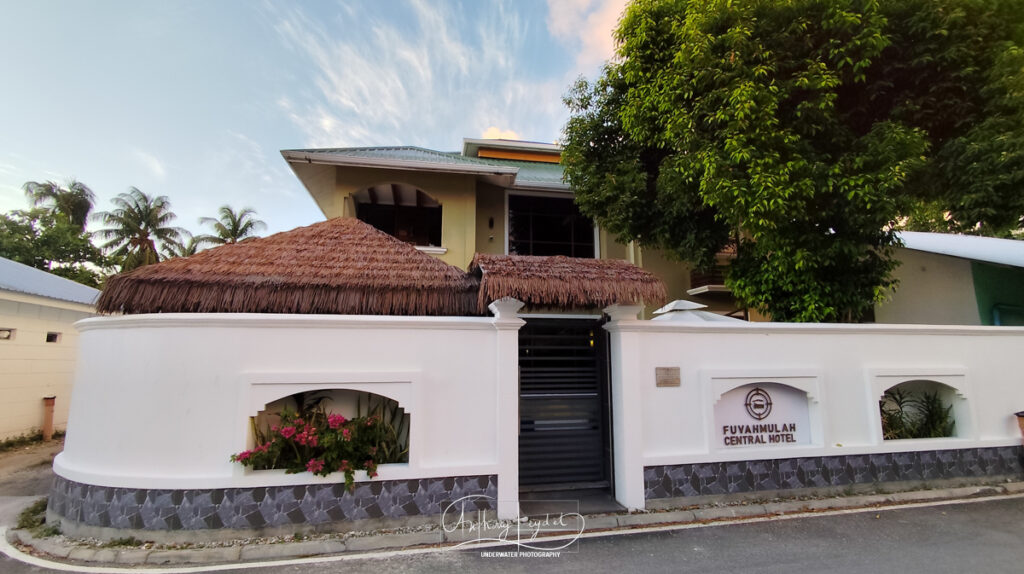
So in July 2026, I had the pleasure of spending an entire week in Fuvahmulah with my adventure and life partner for a well-rounded experience, including both tiger shark encounters and traditional diving at the island’s magnificent sites. It was a wonderful trip, entirely organized by the Fuvahmulah Central Dive Center, which also operates its own lodging: the Fuvahmulah Central Hotel. A charming little hotel with beautiful rooms and all the comforts needed for a pleasant stay. There’s a lovely shaded terrace where you can relax, read, or sort through your photos from the day. As a little bonus, in the lobby you’ll find two high-end massage chairs available for guests to use… Definitely worth trying !

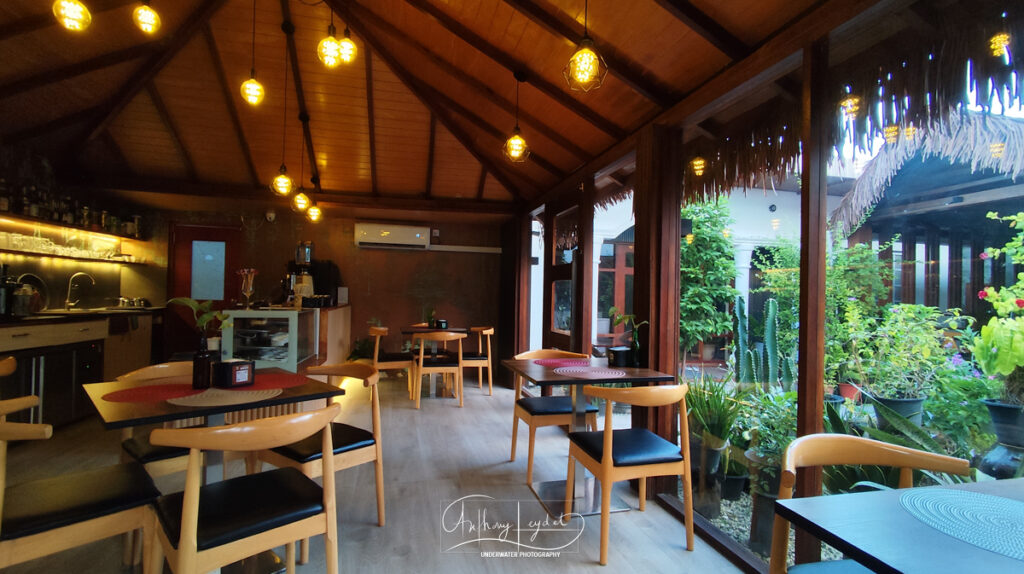
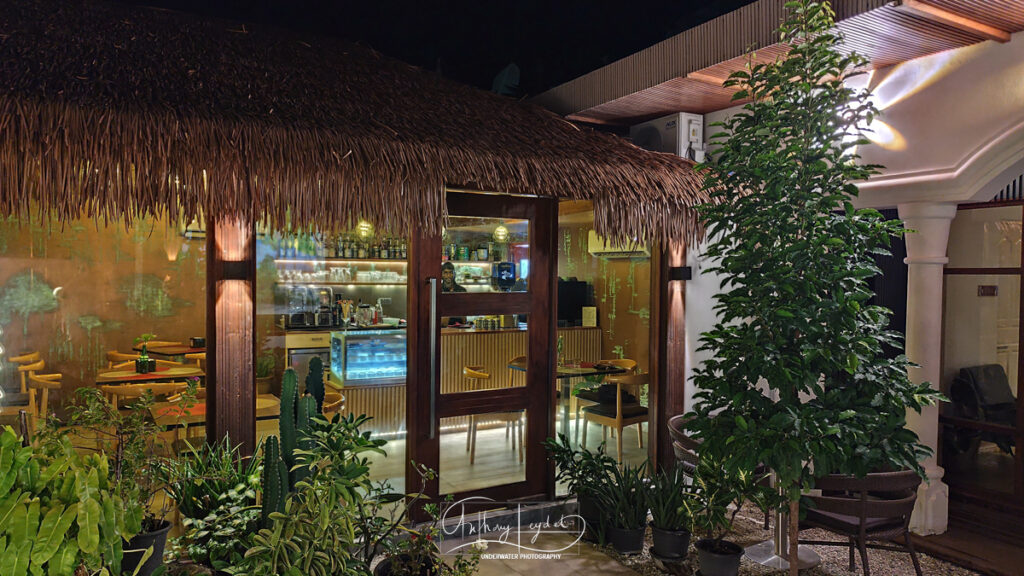
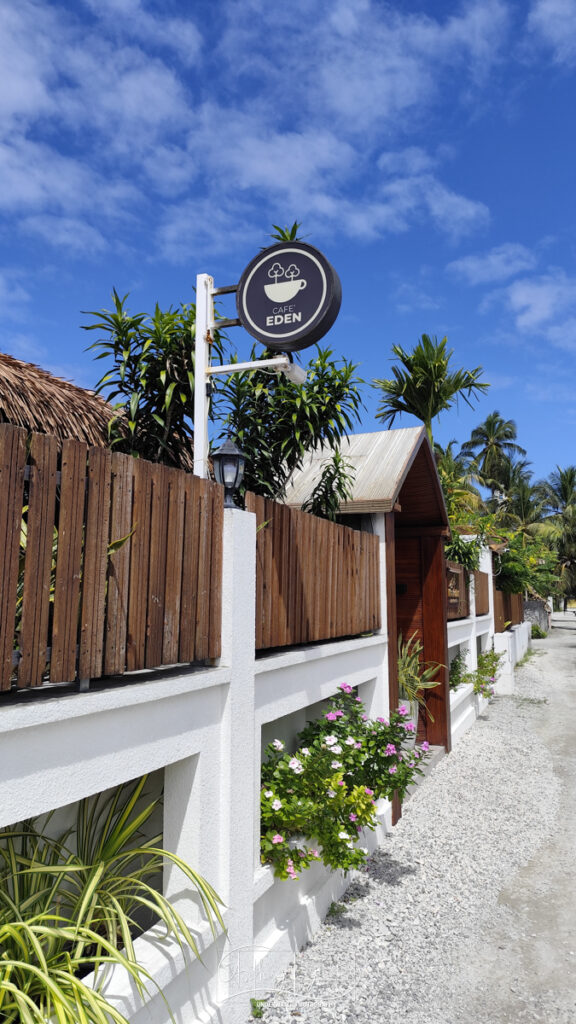
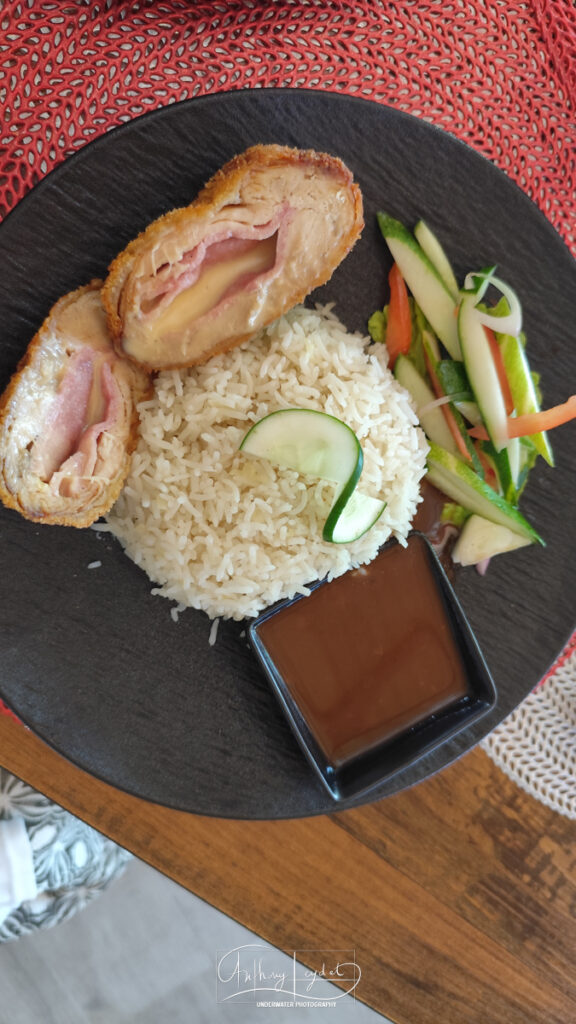
For meals, everything takes place two blocks away (a 5-minute walk), at Cafe Eden, where you can stop by for breakfast, lunch, and dinner if you opt for the full-board plan (which I recommend) for about 20$ a day (to be arranged directly with the dive center). The food is excellent, the place is welcoming, and the staff are very cheerful and friendly.


In terms of organization, everything runs smoothly: the center’s van picks up the “guests” at the scheduled time for a short drive to the small port of Fuvahmulah in the south of the island to board the boat. A WhatsApp group sends you the pickup time and the next day’s dive schedule at the end of each day ! The equipment is entirely managed by the center’s staff, and aside from arrival and departure, divers don’t need to stop by the dive center. Upon arrival, a comprehensive briefing on the “tiger shark” specialty dive is provided, complete with a video.
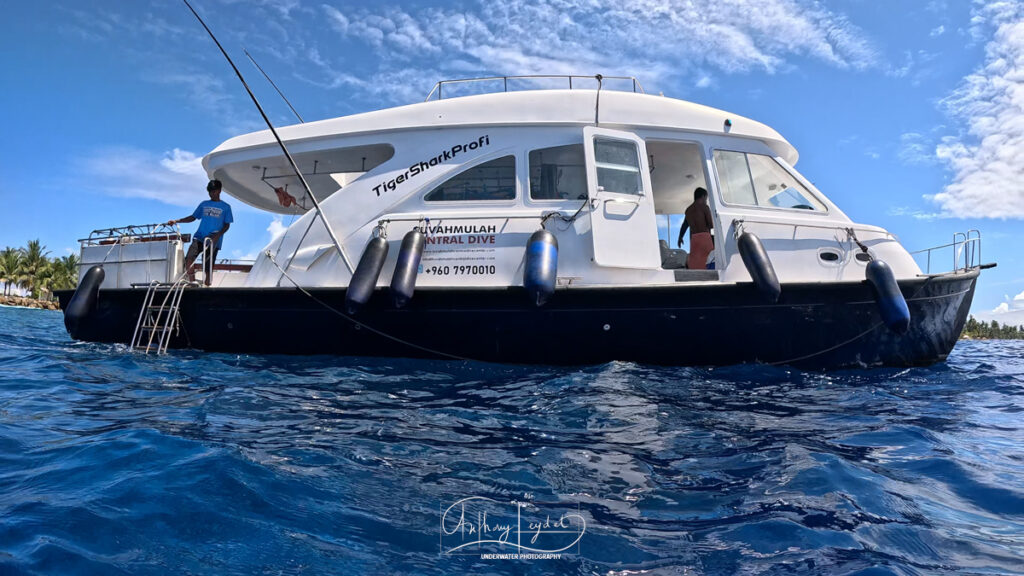
Each day, 3 dives are usually scheduled, with 1 to 2 dives at the Tiger Harbor site (also known as Femunu Kol in Maldivian), and, depending on the situation, 1 to 2 “classic” dives at sites around the island.
We were able to complete 7 dives at Tiger Harbor, a site that attracts divers from all over the world! I admit I felt a little stressed before our first dive, not really knowing what to expect in terms of organization and managing the crowds underwater. But I quickly realized just how professional and experienced the guides at Fuvahmulah Central Dive Center are, and how they ensure divers’ safety to prevent any stress or accidents.
The number of divers is limited, and each dive center is allotted a 30-minute slot at the site. After a thorough safety briefing, we enter the water just a few minutes’ swim away to arrive gently and allow time for divers already there to clear the site. During that half-hour, we fully enjoy the spectacle. The guides position themselves so that divers have nothing else to worry about other than simply enjoying the show. There is always one guide on each side, two behind, and two or three in front with the sharks to manage their reactions. Sometimes, one of the guides may “redirect” a shark with a firm hand when it decides to get a little too close to the divers.
During these dives, we had as many as 8 tiger sharks swimming around us. Impressive! And to be completely honest, once you get past the initial jitters, you quickly realize that you don’t feel threatened at all. These imposing sharks, which actually look rather clumsy, even start to seem harmless after just a few dives, as you get used to their presence and behavior. It’s a completely different feeling when, in the middle of a drift dive in the deep blue waters off the Farikede site in the south of the island (with no visual landmarks) a magnificent tiger shark appears, swimming vertically as if emerging from the abyss and rising right up to our fins ! A simple display of curiosity that, in a matter of seconds, causes the divers’ heart rates to rise slightly…
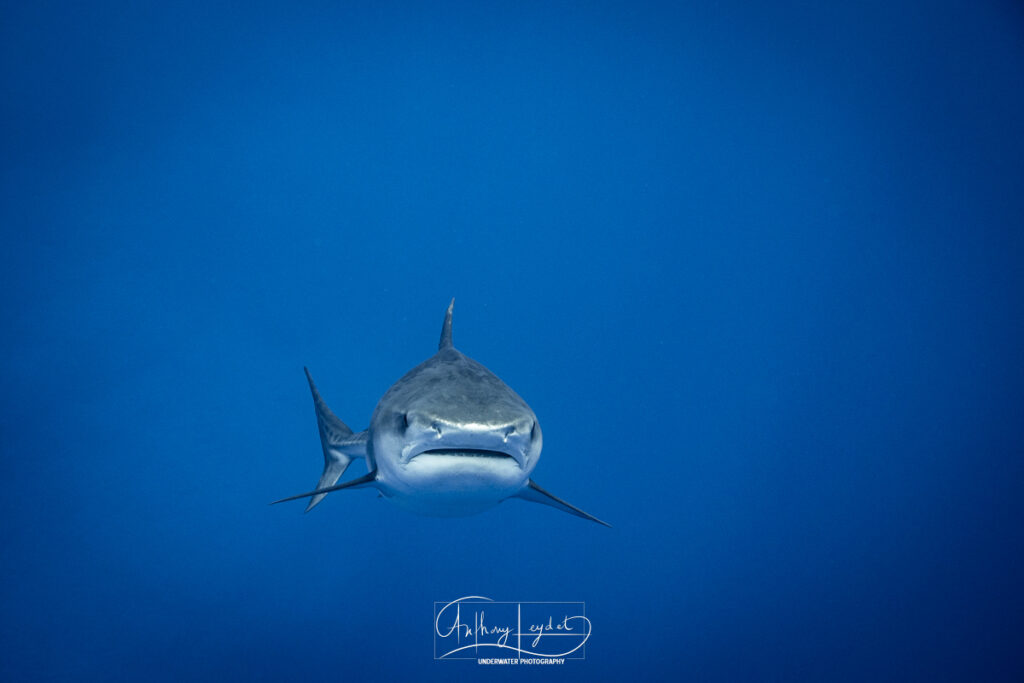
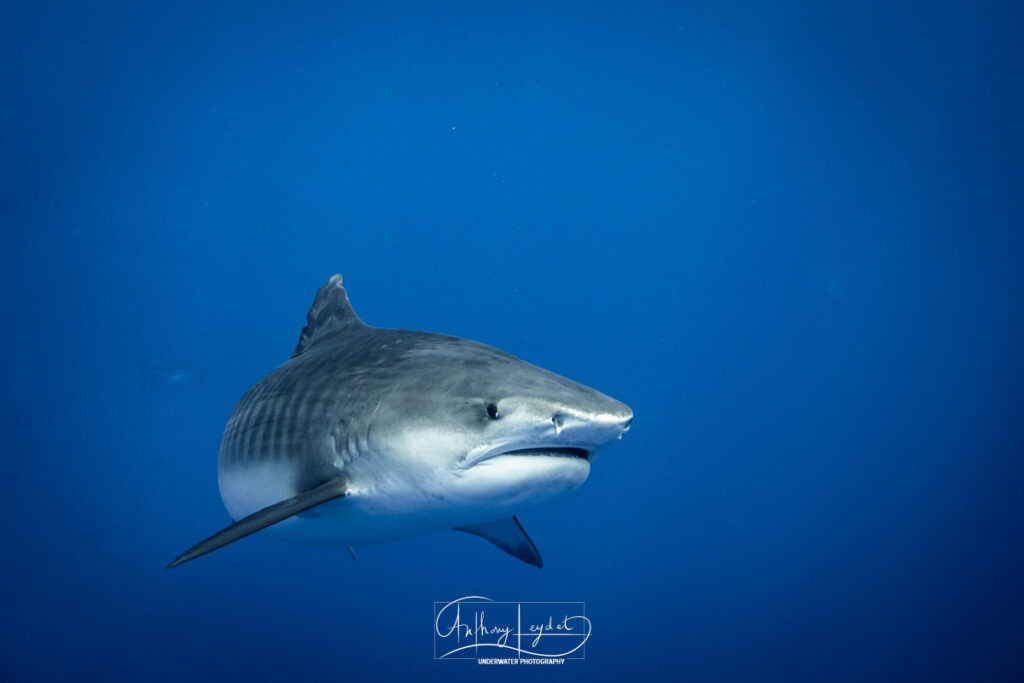
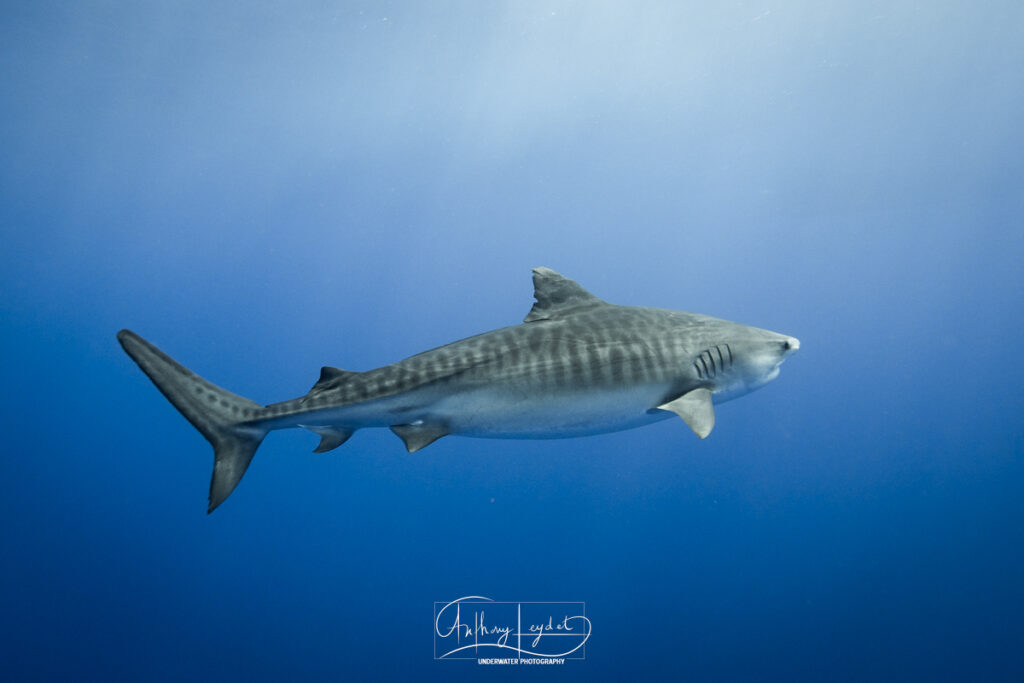
The “classic” dive sites in Fuvahmulah are just as incredible. To be honest, given the island’s geography, I was expecting seabeds with sparse coral cover and less marine life than what we’re used to seeing at Dhuni Kohlu, for example. We were blown away! For one thing, the visibility was quite exceptional, and the coral reefs were absolutely stunning ! There was plenty of marine life, turtles on every dive,and pelagic fish, though unfortunately we didn’t spot the thresher shark, which is actually quite common around the island ! Just bad luck this time around…
Well, I’ll leave you with a few photos capturing the atmosphere of the dives in Fuvahmulah, and I’m pretty sure quite a few of you will be adding this exceptional destination to your wish list !
Please feel free to contact me if you’d like to make this project a reality, I’d be happy to offer advice !
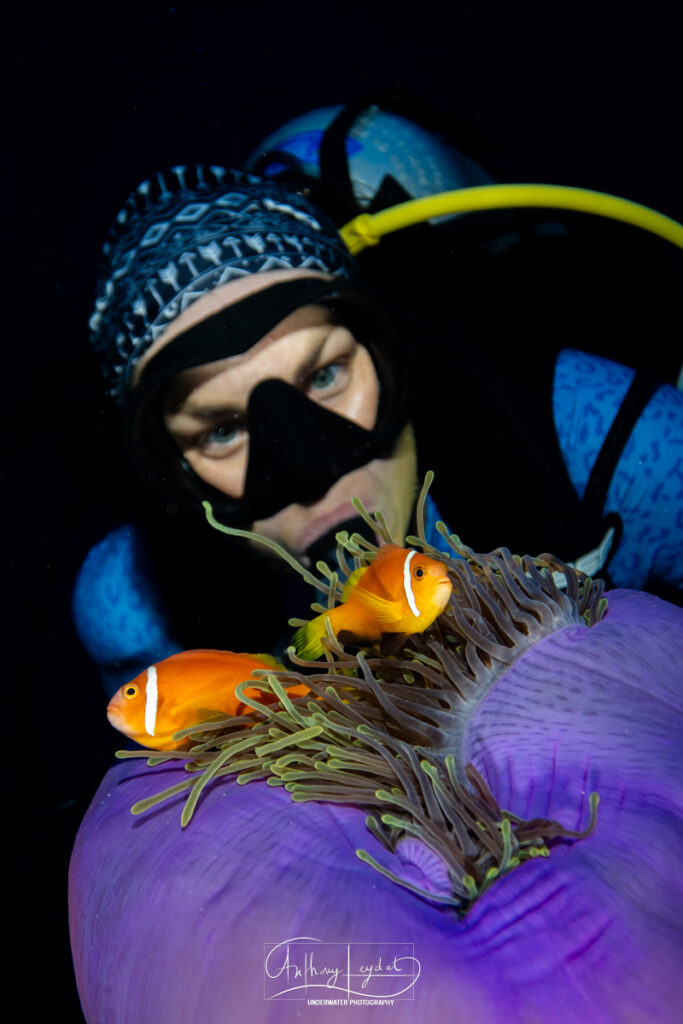
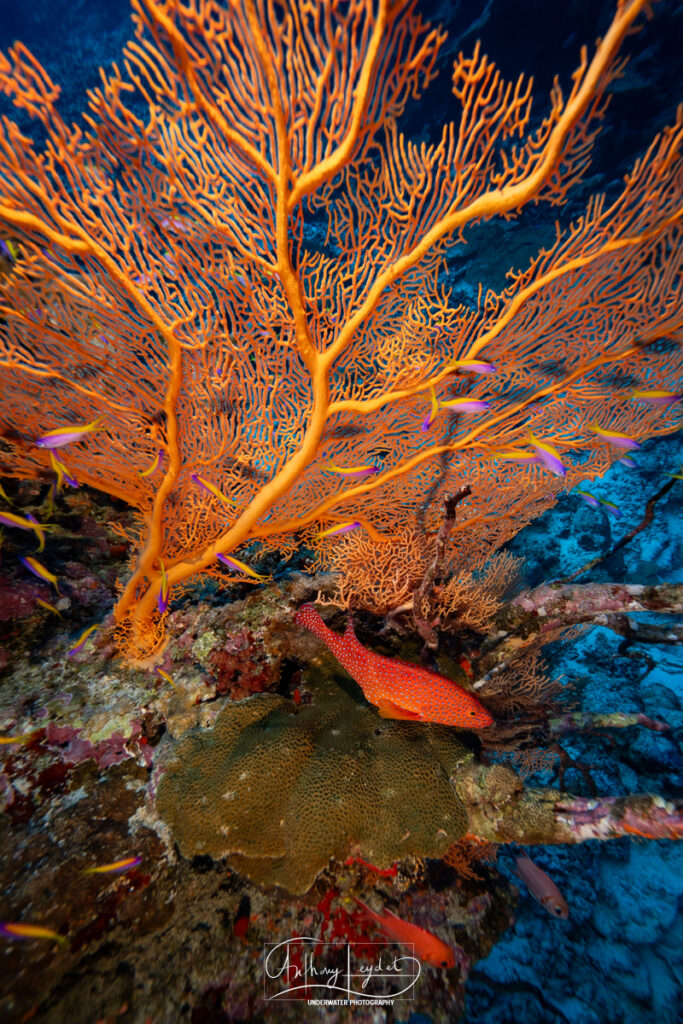
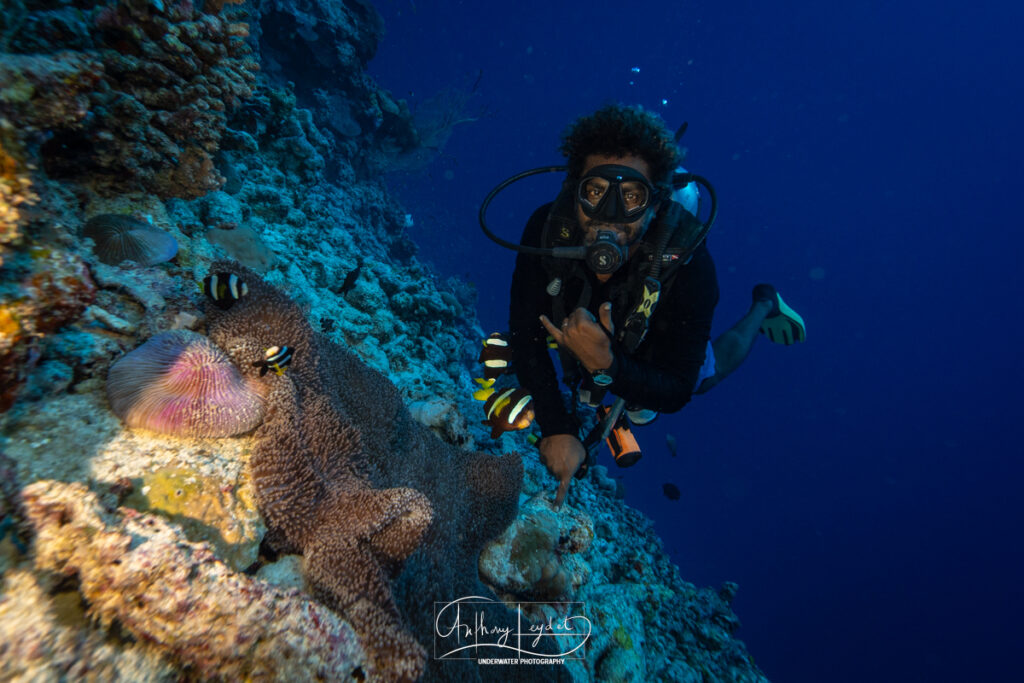
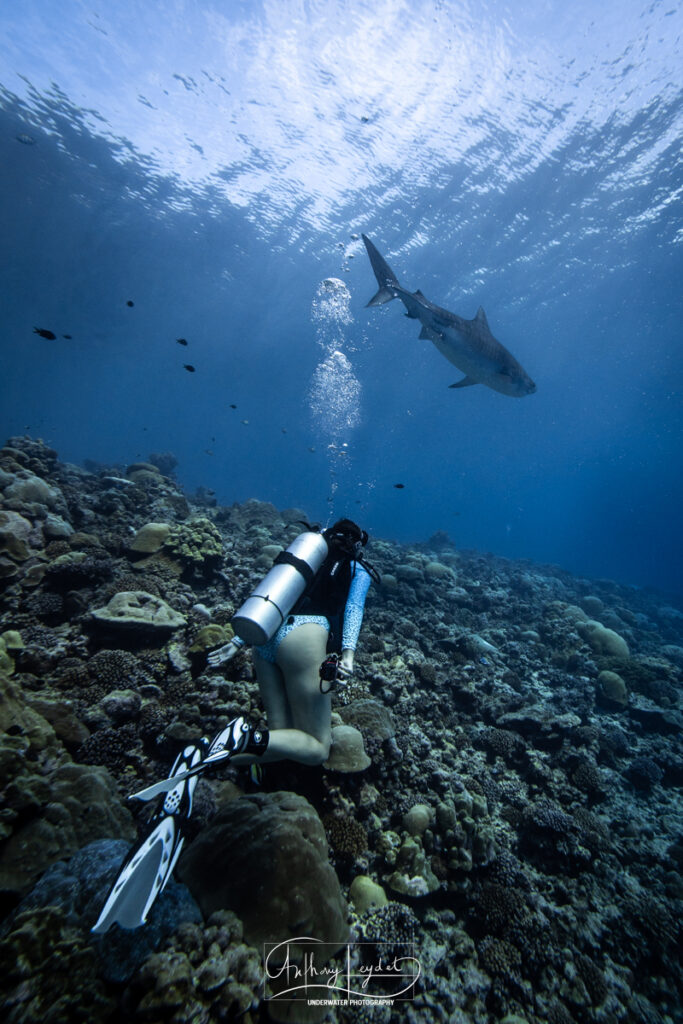
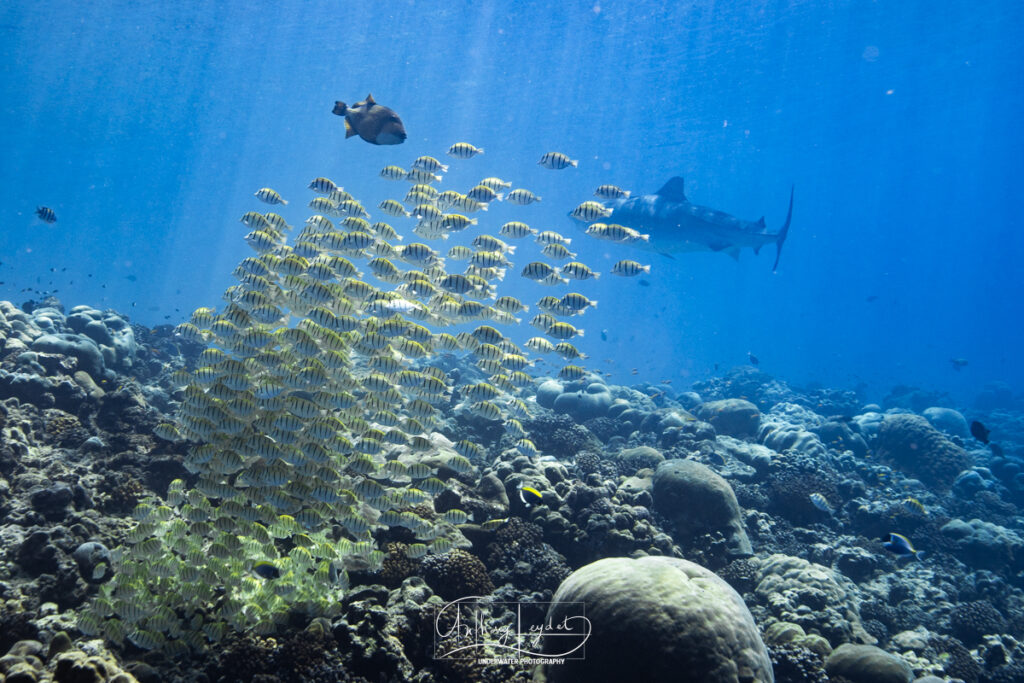
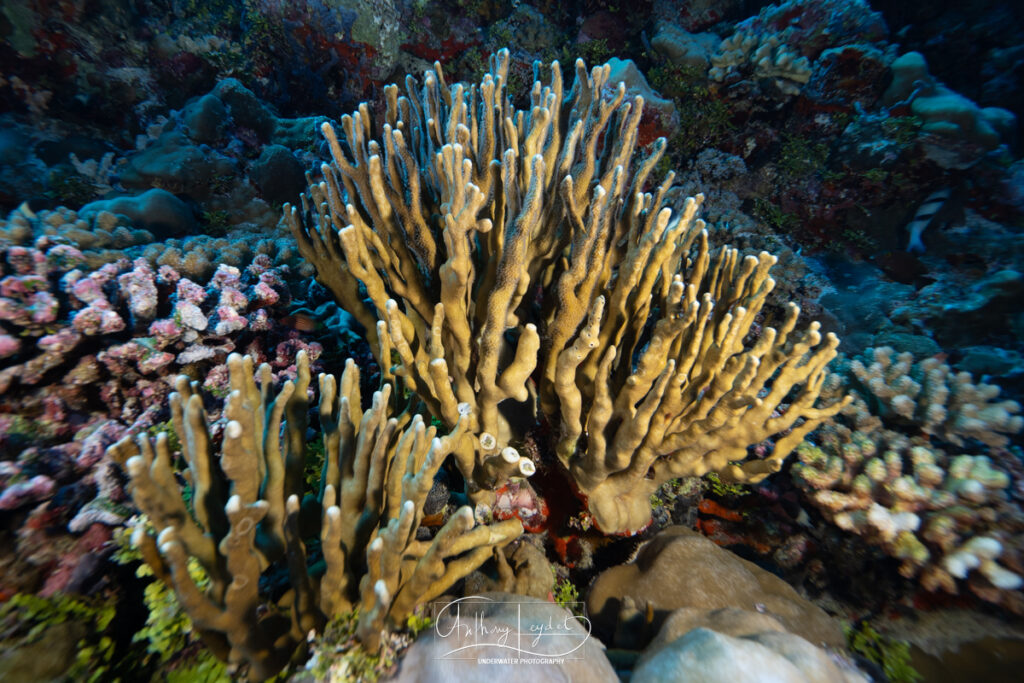
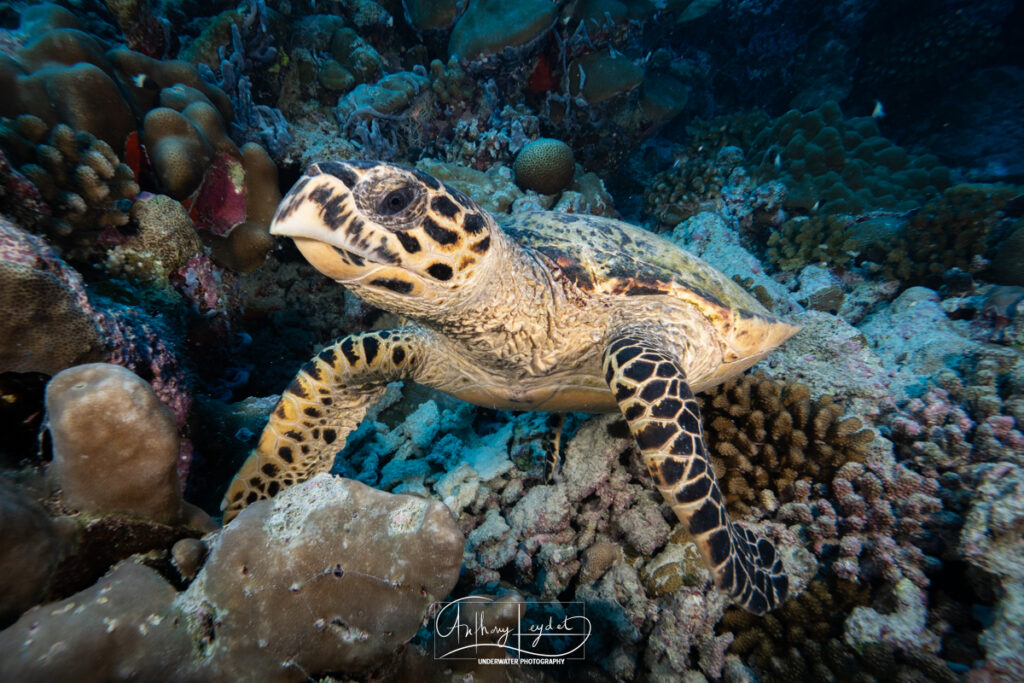
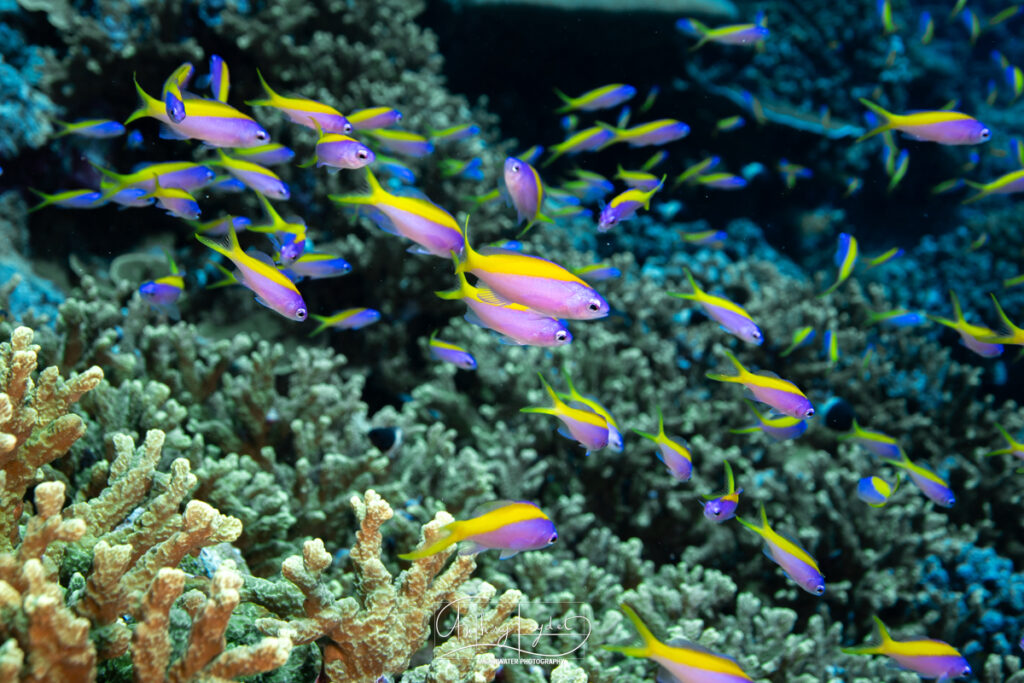
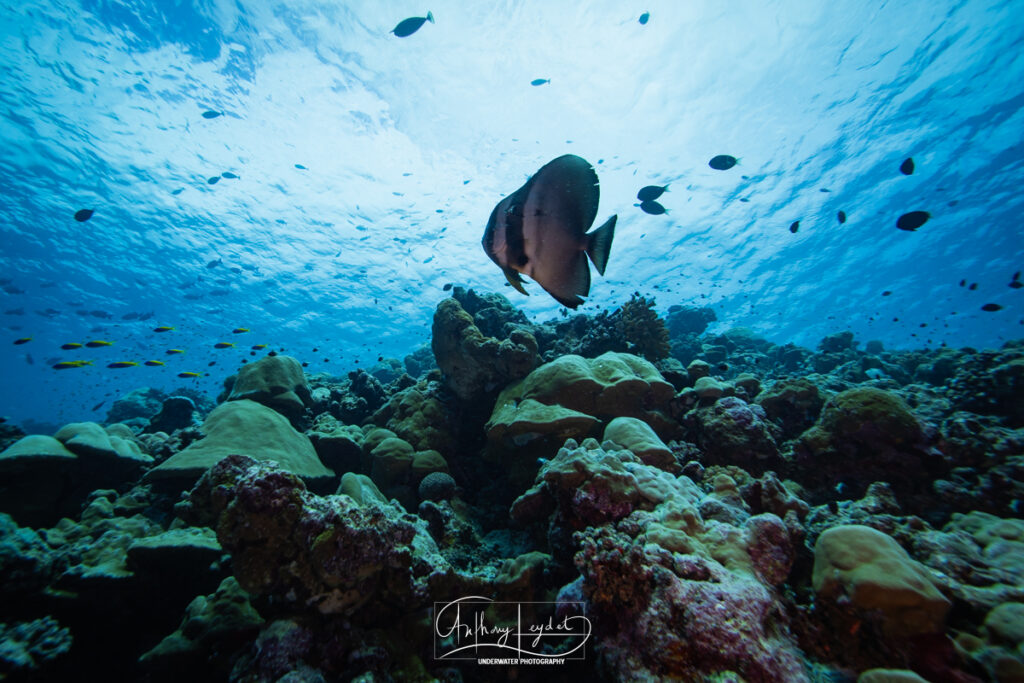
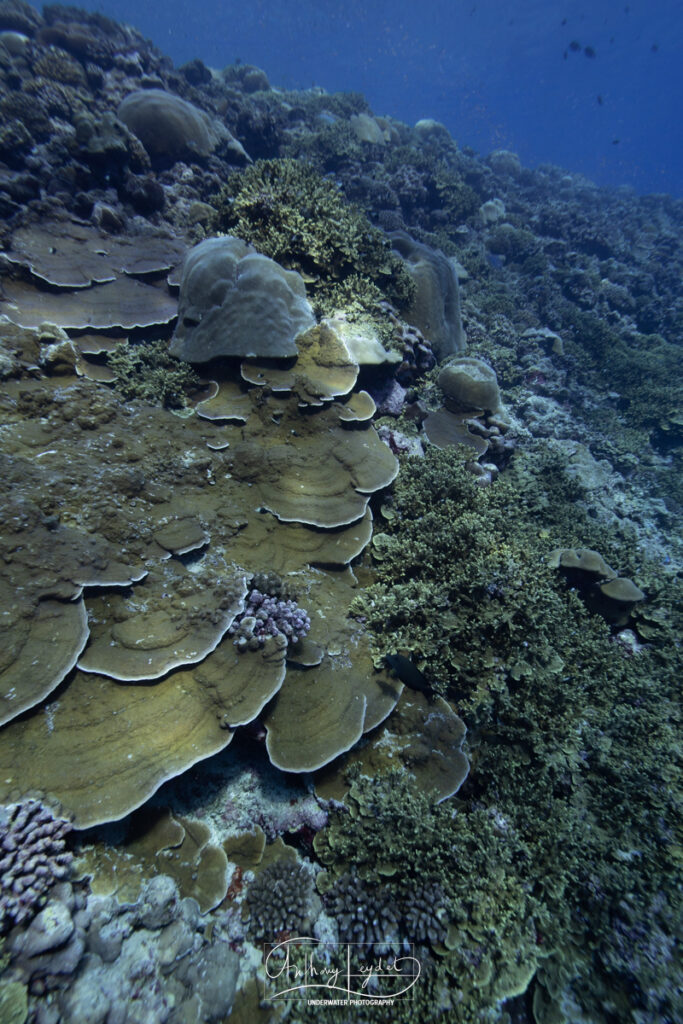
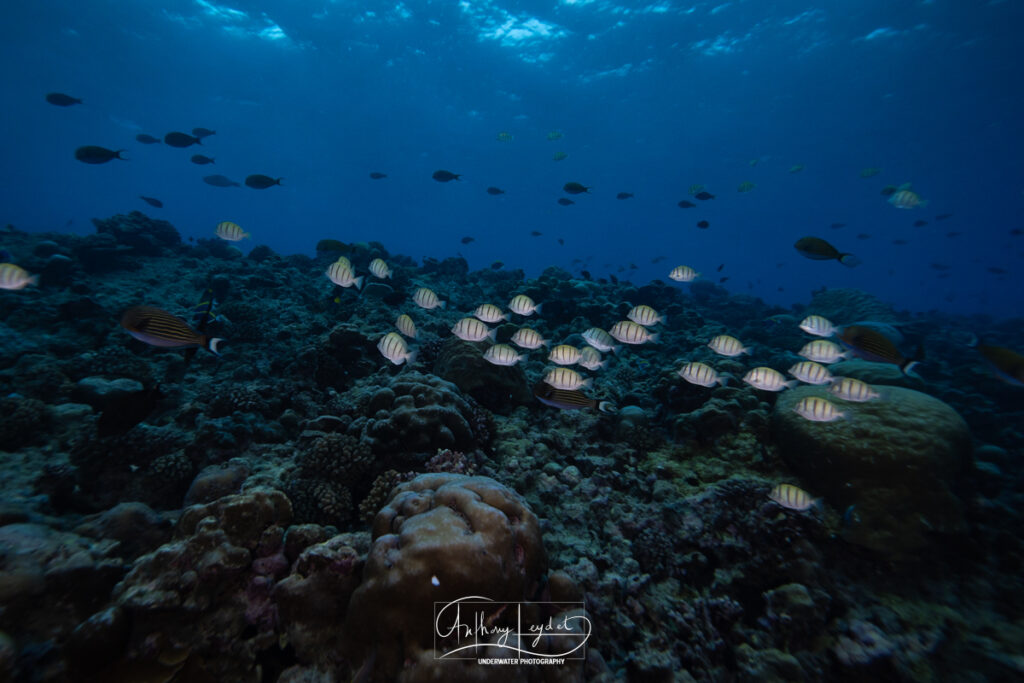
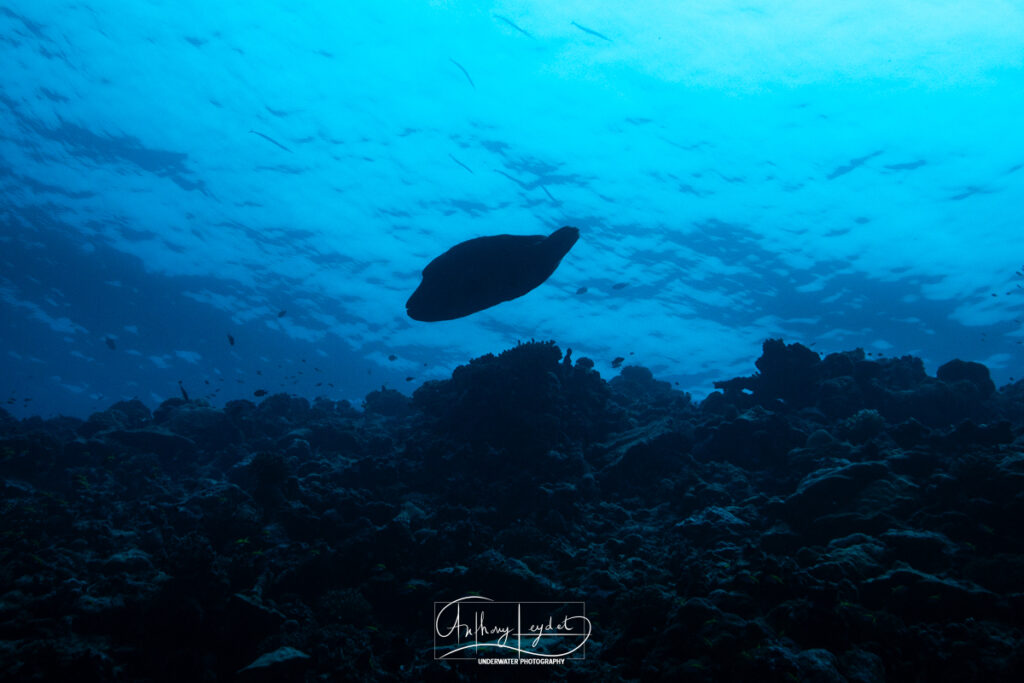
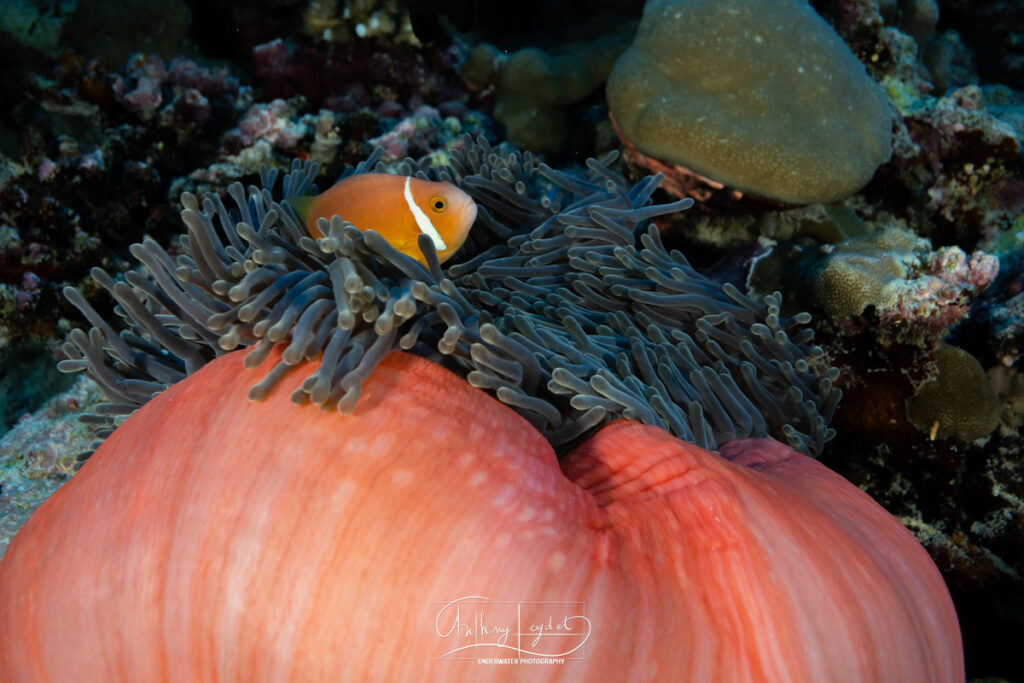
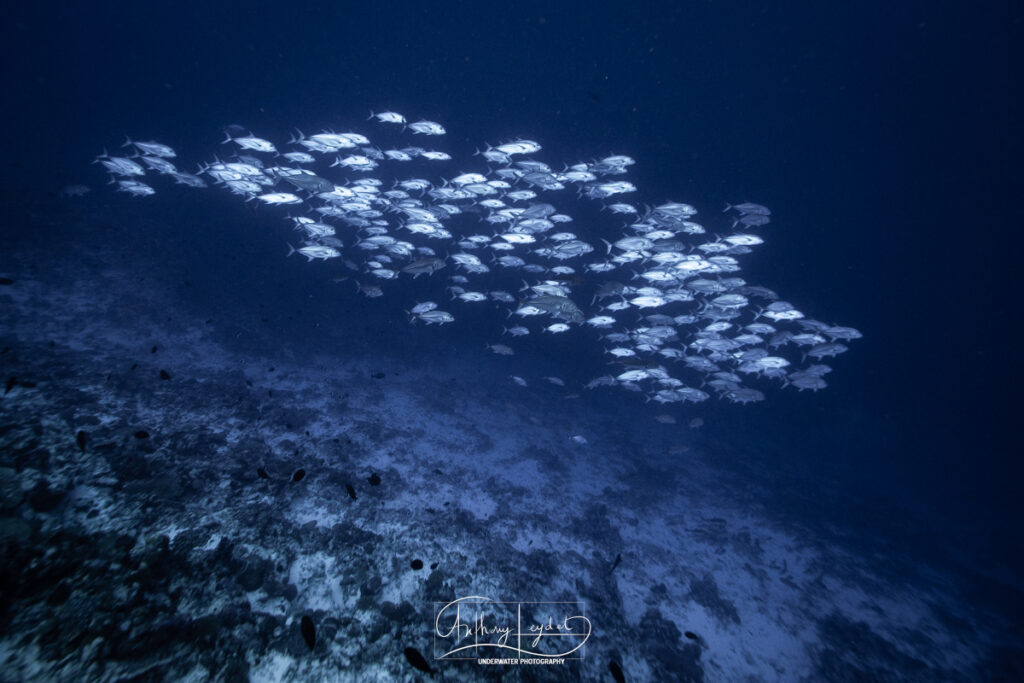
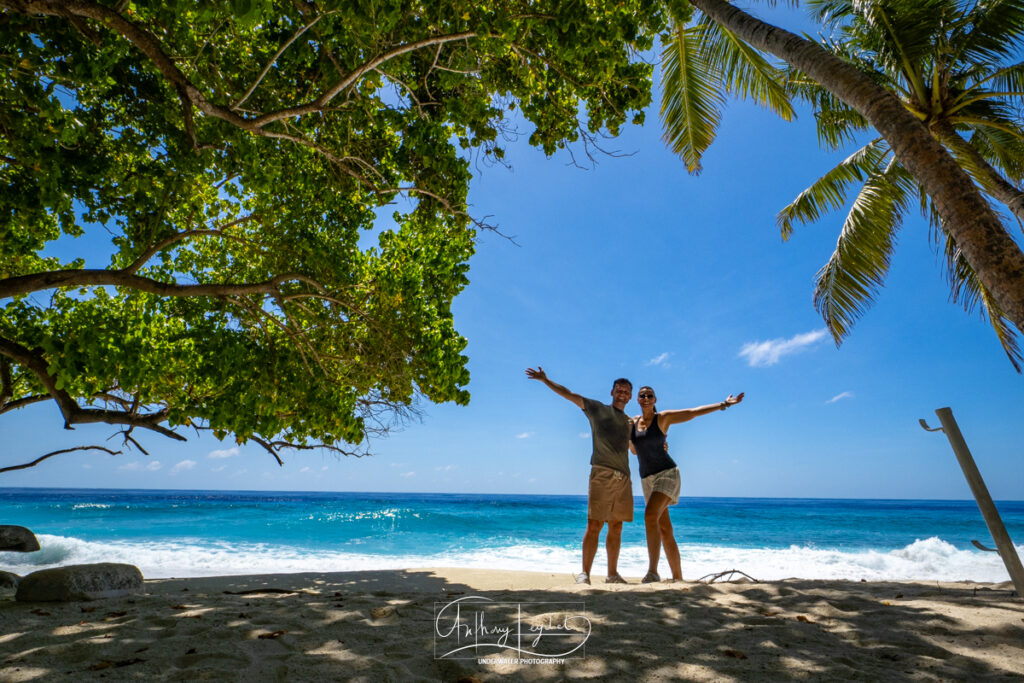
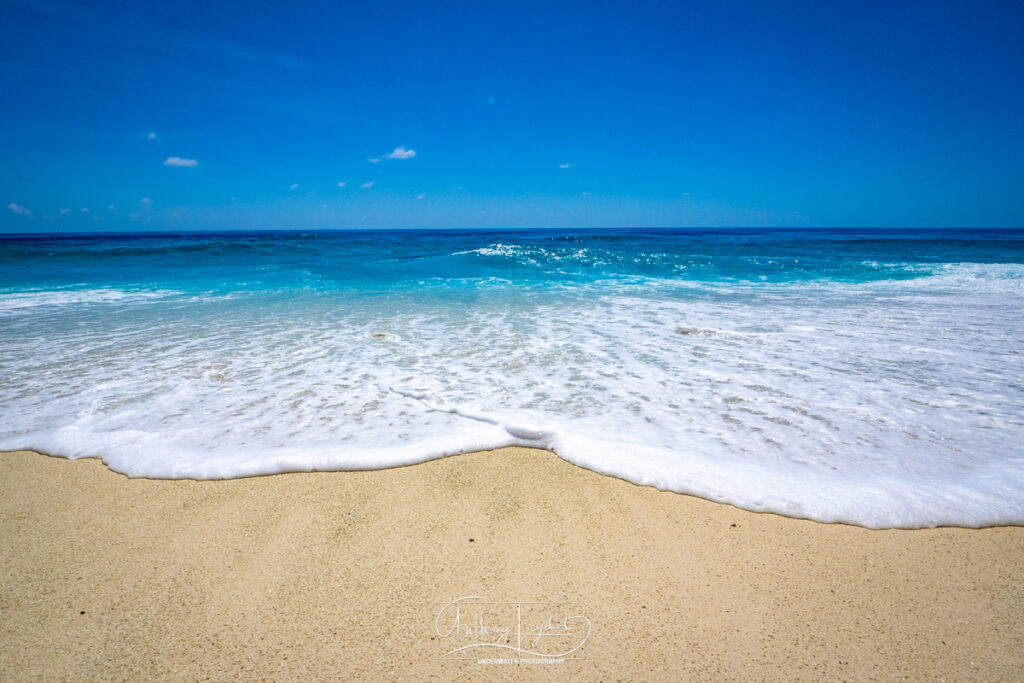
And to wrap things up, here are a few photos taken at Thoodu Beach, north of Fuvahmulah, a place you definitely shouldn’t miss ! Getting there is very easy, just rent a scooter (about $15 a day). Even though they drive on the left, you’ll hardly see any cars, and the roads are very safe ! By the way… no one wears a helmet on the island !!


FAQ
Is the tiger shark dangerous to divers ?
The tiger shark is a powerful predator, but guided encounters in Fuvahmulah are generally calm when safety protocols are followed. The risk increases mainly during feeding, which can lead to competition for food. With an experienced center like Fuvahmulah Central Dive Center, briefings and adherence to guidelines greatly reduce the likelihood of incidents.
When is the best time to dive with tiger sharks in Fuvahmulah ?
The best time to visit is between January and April, during the dry season, which also offers the best chances of seeing whale sharks and manta rays. Tiger sharks, however, can be seen at the site year-round.
How many tiger sharks live in Fuvahmulah ?
A study published in Scientific Reports in 2024 identified 239 individuals over seven years of photographic monitoring, with females accounting for 84.5% of the population. This is the largest known aggregation of the species in the world. In 2026, the Fuvahmulah Shark Research Laboratory announced that a total of 325 tiger sharks had been identified (as of September 2026) since 2017.
Is Fuvahmulah a breeding ground for tiger sharks ?
Yes. A submersible ultrasound study published in Frontiers in Marine Science detected embryos in 93% of the adult females scanned, making Fuvahmulah the first identified gestation area for the species in the central Indian Ocean.
What diving certification is required to dive with tiger sharks in Fuvahmulah ?
An Advanced Open Water certification with about 100 dives of experience is generally recommended, due to the currents and ocean conditions specific to this remote island.
Is feeding sharks legal in Fuvahmulah ?
No, shark feeding is officially prohibited in the Maldives, but the practice continues in reality at this site in the absence of specific national regulations governing baited dives.
What is the difference between the tiger shark and the other sharks seen in Fuvahmulah ?
The tiger shark is notable for its imposing size (up to 5 meters), its distinctive stripes, and its status as a near-permanent resident of the site. Fuvahmulah is also a great place to spot thresher sharks, whitetip reef sharks, gray reef sharks, hammerhead sharks, and, in season, whale sharks and oceanic manta rays.
Summary Table
| Critère | Détail |
|---|---|
| Espèce | Requin-tigre (Galeocerdo cuvier) |
| Site principal | Tiger Harbour, à 1 minute de bateau du port |
| Profondeur | 8-10 m (fond), plongeurs positionnés vers 5 m |
| Population identifiée | 325 individus (Sept 2026) |
| Meilleure période | Janvier à avril (saison sèche) |
| Température de l’eau | 24-26 °C (mai-décembre) / 26-29 °C (janvier-avril) |
| Niveau requis | Advanced Open Water, ~100 plongées recommandées |
| Durée de plongée | 30 minutes maximum sur Tiger Harbour |
| Centre partenaire | Fuvahmulah Central Dive Center |